
Contents
Overview
The dream of a waterway connecting the Mediterranean and Red Seas dates back to antiquity, with early attempts attributed to Senusret III and later Emperor Nero. However, it was the vision of French diplomat Ferdinand de Lesseps that finally brought the Suez Canal to fruition. De Lesseps secured a concession from the Egyptian viceroy Sa'id Pasha in 1854, establishing the Compagnie universelle du canal maritime de Suez in 1858. Construction, employing an estimated 1.5 million Egyptian laborers under often brutal conditions, commenced in 1859 and concluded a decade later. The canal officially opened on November 17, 1869, with a lavish ceremony attended by Empress Eugénie of France and other dignitaries, heralding a new era of global connectivity and imperial reach, though at a significant human cost.
⚙️ How It Works
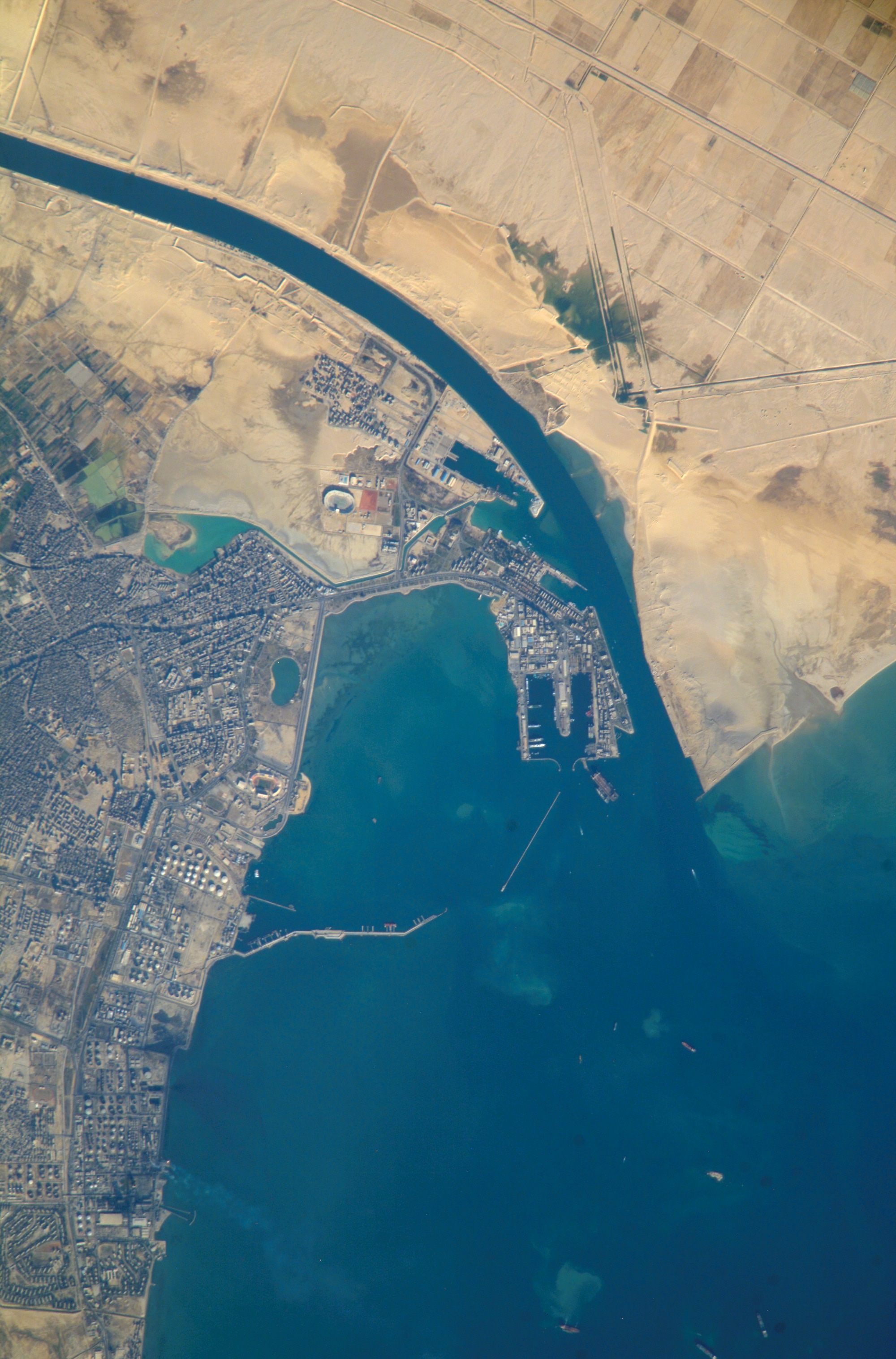
The Suez Canal is an artificial sea-level waterway, meaning it has no locks. Ships navigate directly from the Mediterranean Sea to the Red Sea through the Isthmus of Suez. The main channel is approximately 193.30 kilometers (120.11 miles) long and has a minimum width of 205 meters (673 feet) at its narrowest points, with a depth of about 24 meters (79 feet). The canal operates 24/7, with convoys of ships moving in both directions, though traffic is managed to avoid collisions. Modern navigation relies on advanced radar, satellite positioning systems, and Vessel Traffic Services (VTS) to ensure safe passage. The canal's design allows for the passage of large container ships and oil tankers, though some of the largest vessels require specific conditions or bypass the route entirely.
📊 Key Facts & Numbers
The Suez Canal is a critical artery for global trade, facilitating the movement of approximately 12% of the world's total trade volume. In 2023, over 25,000 vessels transited the canal, carrying an estimated 1.3 billion tons of cargo. The revenue generated for Egypt from canal tolls reached a record $10.28 billion in the fiscal year 2023. The average transit time through the canal is around 11 to 16 hours. The canal's expansion project, completed in 2015, increased its capacity by 50%, allowing for the passage of larger ships and reducing waiting times. Approximately 30% of global container traffic passes through the canal, making it indispensable for supply chains.
👥 Key People & Organizations
The conception and construction of the Suez Canal were driven by Ferdinand de Lesseps, the French diplomat who championed the project and founded the Compagnie universelle du canal maritime de Suez. Sa'id Pasha, the then-ruler of Egypt, granted the concession for the canal's construction. Isma'il Pasha, his successor, oversaw much of the canal's operational development and faced significant pressure from European powers regarding its control. Gamal Abdel Nasser, President of Egypt, nationalized the Suez Canal Company in 1956, a move that led to the Suez Crisis. The Suez Canal Authority (SCA), established in 1957, is the state-owned entity responsible for the operation, maintenance, and management of the canal.
🌍 Cultural Impact & Influence
The Suez Canal's impact on global culture and geopolitics is profound. It dramatically reshaped maritime trade, enabling faster and cheaper transport of goods between Europe and Asia, thereby fueling colonial expansion and international commerce. The canal became a symbol of national pride and a flashpoint for international conflict, particularly during the 1956 Suez Crisis, which significantly altered the global balance of power and underscored Egypt's strategic importance. Its existence has influenced art, literature, and film, often depicted as a gateway to the East or a site of imperial ambition and national struggle. The canal's continued operation remains a barometer of global stability and economic health.
⚡ Current State & Latest Developments
As of 2024, the Suez Canal remains one of the world's most critical maritime choke points. The Suez Canal Authority (SCA) continues to invest in upgrades and expansions to accommodate larger vessels and increase traffic flow. The 2015 expansion, which created a parallel channel alongside a 35-kilometer stretch, significantly boosted capacity. However, the canal faces ongoing challenges, including the potential impact of climate change on sea levels and the ever-increasing size of global shipping fleets. The grounding of the container ship Ever Given in March 2021, which blocked the canal for six days, highlighted its vulnerability and the immense economic consequences of any disruption. The SCA is exploring further deepening and widening projects to maintain its competitive edge.
🤔 Controversies & Debates
The Suez Canal has been a site of significant international controversy, primarily centered on its ownership and control. The nationalization of the canal by Gamal Abdel Nasser in 1956, against the wishes of France and the United Kingdom, led to the Suez Crisis, a military confrontation that ultimately saw the withdrawal of invading forces but solidified Egyptian control. Debates continue regarding the equitable distribution of benefits from canal tolls versus the environmental impact of increased shipping traffic. The grounding of the Ever Given in 2021 also sparked discussions about the canal's infrastructure resilience and the adequacy of pilot training for ultra-large vessels.
🔮 Future Outlook & Predictions
The future of the Suez Canal hinges on its ability to adapt to evolving global trade dynamics and environmental concerns. The SCA has ambitious plans for further expansion, including deepening the southern section and widening the northern section, aiming to increase daily transit capacity to 100 ships by 2023. There is also a long-term vision for developing the Suez Canal Economic Zone into a major industrial and logistics hub. However, the canal faces competition from alternative routes, such as the Northern Sea Route made increasingly accessible by climate change, and potential overland transport solutions. The ongoing geopolitical stability of the region will also be a crucial factor in its sustained success.
💡 Practical Applications
The primary application of the Suez Canal is as a vital maritime transit route, significantly reducing travel distances between Europe and Asia. It facilitates the transport of a vast array of goods, including crude oil, refined petroleum products, containerized cargo, dry bulk commodities, and manufactured goods. For the Suez Canal Authority, its operation is the core business, generating substantial revenue through transit fees. Beyond shipping, the canal's development has spurred economic activity in the surrounding Suez Governorate and the broader Suez Canal Economic Zone, attracting investment in logistics, manufacturing, and services. It also serves as a critical strategic asset for Egypt, influencing its foreign policy and regional standing.
Key Facts
- Category
- history
- Type
- place