
Contents
- 🧭 The Genesis of a Grand Design
- 🚢 The Armada and the Unlikely Crew
- 🌊 Navigating the Treacherous Strait
- 🌏 The Pacific: An Ocean of Unknowns
- ⚔️ Encounters and Exploitation in the East
- 💀 Magellan's Fatal Miscalculation
- 🔄 The Victoria's Lone Return
- 📈 The Legacy: More Than Just a Voyage
- Frequently Asked Questions
- Related Topics
Overview
The ambition to circumnavigate the globe wasn't born in a vacuum; it was the culmination of centuries of European exploration and a burning desire to find a westward route to the lucrative Spice Islands. Ferdinand Magellan, a Portuguese navigator with a contentious past and a burning ambition, proposed his audacious plan to King Charles I of Spain in 1517. He envisioned a westward passage that would bypass the Portuguese-controlled eastern routes, offering Spain a direct and potentially exclusive path to the riches of the East. This wasn't just about trade; it was a geopolitical gambit, a bid for economic and strategic dominance in an era defined by maritime power. The king, eager to challenge Portuguese supremacy, greenlit the expedition, a decision that would etch Magellan's name into the annals of history, for better or worse.
🚢 The Armada and the Unlikely Crew
In August 1519, five ships – the Trinidad, San Antonio, Concepción, Victoria, and Santiago – set sail from Seville, forming the Spanish Armada. The crew was a motley collection, a microcosm of 16th-century Europe, comprising over 270 men from various nations, including Spaniards, Portuguese, Italians, French, and Greeks. Crucially, the expedition was fraught with internal tension from the outset. Many of the captains and officers were Spanish, resentful of Magellan's Portuguese command and suspicious of his ultimate loyalties. This simmering distrust, coupled with the immense pressure of the unknown, created a volatile atmosphere that would plague the voyage from its inception, foreshadowing the mutinies and betrayals to come.
🌏 The Pacific: An Ocean of Unknowns
Emerging from the strait in November 1520, Magellan found himself facing an ocean of unimaginable vastness, which he christened the 'Mar Pacifico' due to its apparent calm. This vast expanse, however, proved to be a deceptive illusion. The crossing of the Pacific took an astonishing 99 days, during which the crew endured horrific conditions. Starvation, scurvy, and thirst became rampant. They subsisted on dried biscuits, leather, and sawdust, with fresh water becoming a precious commodity. This leg of the journey was a testament to human endurance, pushing the limits of what was thought possible, and revealing the sheer scale of the planet in a way that previous voyages had only hinted at.
⚔️ Encounters and Exploitation in the East
The fleet finally made landfall in the Philippines in March 1521, a region rich in spices and ripe for trade, but also a complex political landscape. Magellan, seeking to establish Spanish influence and convert local populations to Christianity, became entangled in the affairs of the island of Mactan. He formed an alliance with Rajah Humabon of Cebu, who promised allegiance and tribute. However, this alliance was fragile, and Magellan's aggressive approach, coupled with his underestimation of local resistance, set the stage for a fatal confrontation. The allure of the Spice Islands had drawn them across the globe, but the reality of local power dynamics proved far more complex than anticipated.
💀 Magellan's Fatal Miscalculation
Magellan's hubris, or perhaps a desperate attempt to assert his authority and secure a decisive victory, led him to underestimate the forces arrayed against him on Mactan. On April 27, 1521, he led a small contingent of heavily armed men against the warriors of Lapu-Lapu, the chieftain of Mactan, who refused to submit to Spanish rule. Magellan, despite his armor, was overwhelmed by the sheer number of warriors and the ferocity of their attack. He was struck by a poisoned arrow and then finished off with spears and swords. His death marked a tragic end to his personal quest, a stark reminder that even the most ambitious explorers are subject to the unpredictable currents of local resistance and the fortunes of war.
🔄 The Victoria's Lone Return
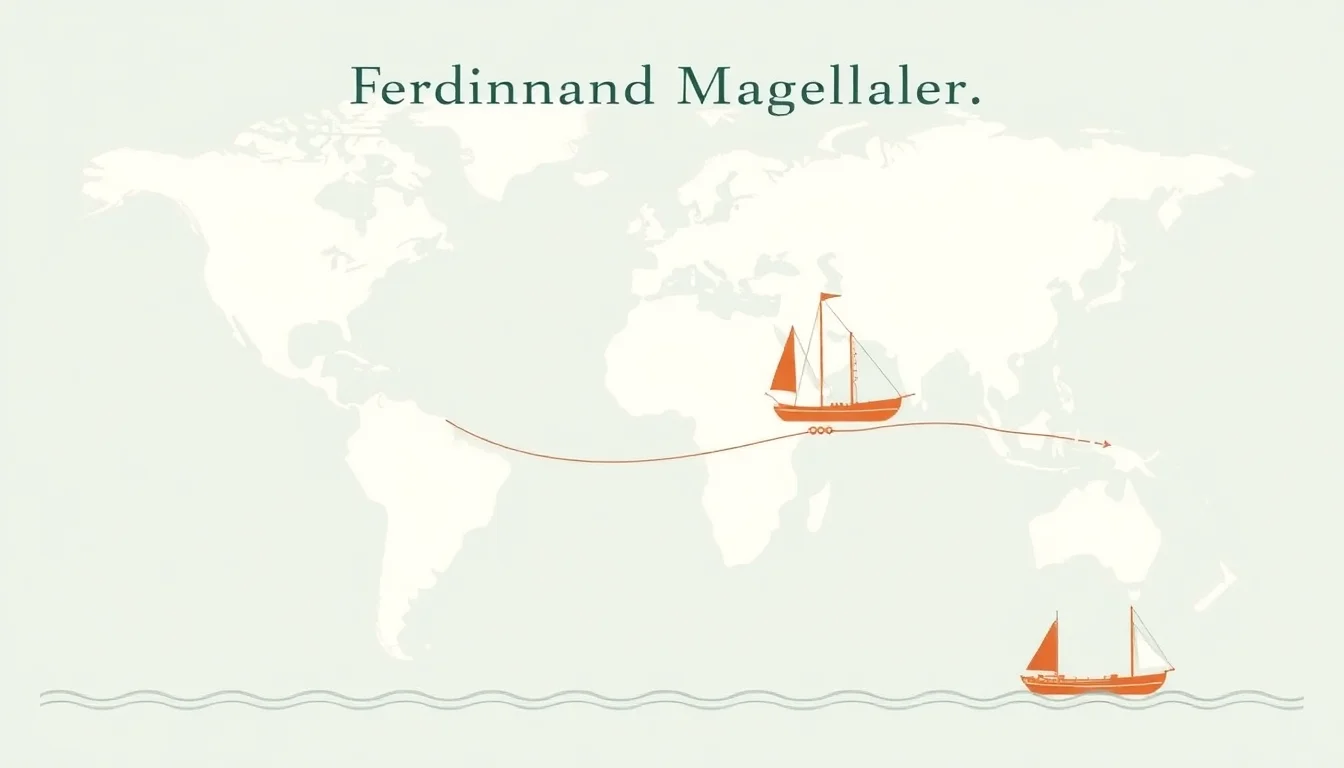
Following Magellan's death, the expedition was in disarray. The remaining ships, the Concepción and the Victoria, were tasked with completing the circumnavigation. The Concepción was eventually scuttled due to a lack of men to crew it. Under the command of Juan Sebastián Elcano, the Victoria, laden with a precious cargo of cloves, finally set sail for Spain. After a perilous journey, enduring further hardship and the loss of more men, the Victoria limped into Sanlúcar de Barrameda on September 6, 1522, with only 18 survivors. This single ship, having completed the first-ever circumnavigation of the Earth, proved that the planet was indeed round and that a westward route to the East was feasible, albeit incredibly dangerous.
📈 The Legacy: More Than Just a Voyage
The circumnavigation, despite its immense cost in lives and ships, fundamentally altered humanity's understanding of the world. It provided irrefutable proof of Earth's spherical nature and revealed the true scale of the Pacific Ocean. The voyage also had profound geopolitical consequences, solidifying Spain's claim to the Philippines and opening new trade routes, though the westward passage proved too long and arduous for regular commercial use. The expedition's detailed maps and navigational logs, meticulously compiled by individuals like Antonio Pigafetta, became invaluable resources for future explorers. The narrative of Magellan's journey, a saga of ambition, endurance, and tragedy, continues to inspire awe and debate, a testament to the enduring human drive to explore the unknown.
Key Facts
- Year
- 1519
- Origin
- Vpedia
- Category
- History
- Type
- Historical Event
Frequently Asked Questions
Who was Ferdinand Magellan?
Ferdinand Magellan was a Portuguese explorer and navigator who, in the service of Spain, led the first expedition to circumnavigate the Earth. Born around 1480, he was a skilled mariner who had previously served in Portuguese India. His ambition led him to propose a westward route to the Spice Islands to the Spanish crown, a daring plan that ultimately resulted in the first global circumnavigation, though he did not survive to complete it himself.
What was the primary goal of Magellan's expedition?
The primary goal was to find a westward sea route to the Spice Islands (modern-day Indonesia). This would allow Spain to access the lucrative spice trade without infringing on the Portuguese-controlled eastern routes, as established by the Treaty of Tordesillas. It was a strategic and economic endeavor aimed at challenging Portuguese dominance in global trade.
Did Magellan actually circumnavigate the globe?
Ferdinand Magellan initiated and led the expedition that achieved the first circumnavigation of the Earth. However, he was killed in the Battle of Mactan in the Philippines in 1521, long before the voyage was completed. The circumnavigation was ultimately finished by Juan Sebastián Elcano and the surviving crew aboard the ship Victoria in 1522.
What were the biggest challenges faced by the crew?
The crew faced immense challenges, including mutinies from disgruntled Spanish officers, treacherous navigation through unknown waters like the Strait of Magellan, severe storms, starvation, and rampant scurvy due to lack of fresh food and vitamin C. The vastness of the Pacific Ocean crossing, lasting 99 days, was particularly brutal, pushing the men to the brink of survival.
What was the significance of the voyage?
The voyage provided the first definitive proof that the Earth was round and that it was possible to sail around it. It dramatically expanded European knowledge of world geography, revealing the true size of the Pacific Ocean and establishing a westward route to Asia. It also had significant geopolitical implications, influencing colonial claims and trade routes for centuries to come.
How many ships and men started the voyage, and how many returned?
The expedition began with five ships and an estimated 270 men. Only one ship, the Victoria, returned to Spain in 1522, carrying just 18 survivors. The vast majority of the crew perished due to disease, starvation, battle, and desertion during the three-year journey.