
Summary
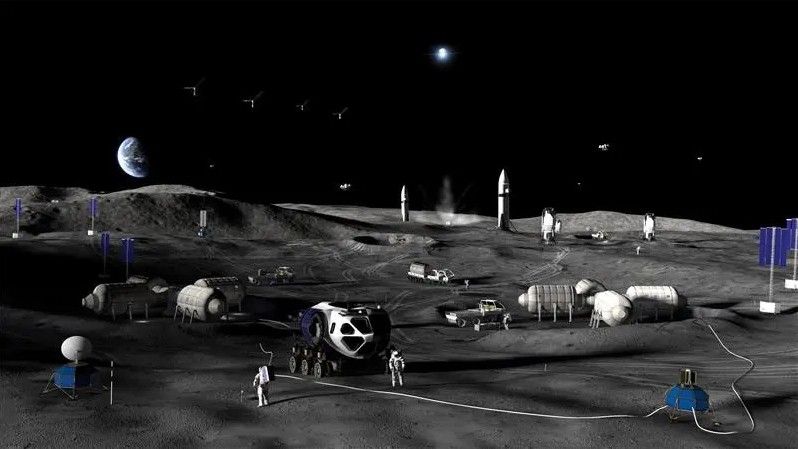
NASA has released a 'Moon Base User's Guide' that highlights the significant challenges the agency and its partners must overcome to establish a sustainable presence on the **lunar surface**. The guide comes as NASA aims to return humans to the **moon** by 2025 and establish a **lunar base**. However, the agency faces major gaps in **space technology**, **radiation protection**, and **life support systems**. The project is considered NASA's most ambitious space project to date, with plans for **73 moon landings**. The guide is a crucial step towards addressing these challenges and ensuring the success of the mission. For more information, see [[nasa|NASA]] and [[space-exploration|space exploration]]. The project's success will depend on the development of new technologies, such as **advanced propulsion systems** and **in-situ resource utilization**. Additionally, the agency must also consider the **psychological and sociological impacts** of long-term space travel on astronauts.
Key Takeaways
- NASA has released a 'Moon Base User's Guide' that highlights the challenges associated with establishing a sustainable presence on the lunar surface
- The agency aims to return humans to the moon by 2025 and establish a lunar base
- The project is considered NASA's most ambitious space project to date, with plans for 73 moon landings
- The success of the mission will depend on the ability of NASA and its partners to address the technical and logistical challenges
- The establishment of a lunar base could have significant implications for the future of space exploration and the development of new technologies
Balanced Perspective
The 'Moon Base User's Guide' provides a detailed overview of the challenges associated with establishing a sustainable presence on the **lunar surface**. While the guide is a significant step forward for NASA's lunar ambitions, it also highlights the significant technical and logistical challenges that must be overcome. The agency faces major gaps in **space technology**, **radiation protection**, and **life support systems**, which will require significant investment and development. For more information, see [[space-technology|space technology]] and [[radiation-protection|radiation protection]]. The success of the mission will depend on the ability of NASA and its partners to address these challenges and develop the necessary technologies.
Optimistic View
The release of the 'Moon Base User's Guide' is a significant step forward for NASA's lunar ambitions. The guide provides a comprehensive overview of the challenges and opportunities associated with establishing a sustainable presence on the **lunar surface**. With the right investment and support, NASA can overcome these challenges and achieve its goal of returning humans to the **moon** by 2025. The success of this mission will have significant implications for the future of **space exploration** and the development of new technologies. As noted by [[elon-musk|Elon Musk]], the establishment of a **lunar base** could be a crucial step towards becoming a **multi-planetary species**.
Critical View
The release of the 'Moon Base User's Guide' highlights the significant challenges and uncertainties associated with NASA's lunar ambitions. The agency faces major gaps in **space technology**, **radiation protection**, and **life support systems**, which will be difficult to overcome. The project is also likely to be extremely costly and may divert resources away from other important scientific and technological priorities. As noted by critics, the establishment of a **lunar base** may not be the most effective or efficient way to advance our understanding of the **moon** and the **solar system**. For more information, see [[lunar-base| lunar base]] and [[solar-system|solar system]].
Source
Originally reported by Live Science